
Operational efficiency
Business analytics
 •  
September 29, 2026

Four insurance teams on closing the gap between quote and bind

Anna Wentz
By
Anna Wentz
Insurance Industry Advisor, Zennify

Ask four insurance leaders what made their quoting faster, and you'll get four different technology answers. Ask what it actually took to get there, and the answers start to sound the same.

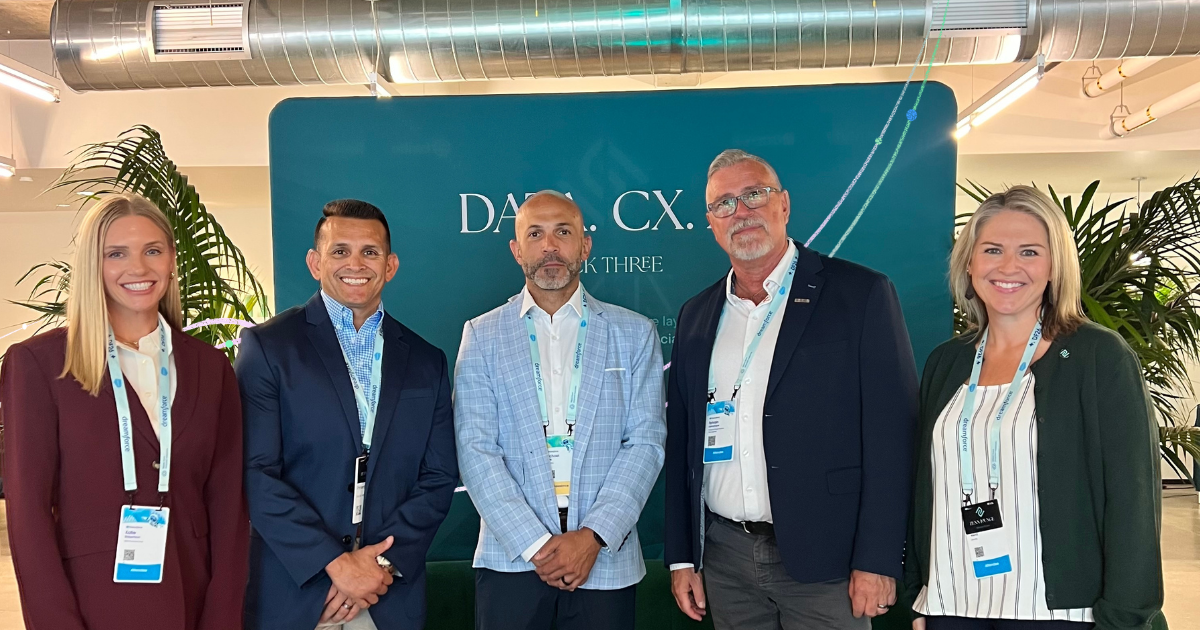
I hosted our insurance panel at the Zenn Lounge during Dreamforce week with four people who've spent the last two years living this problem: Sylvain Lamanque of Navacord Travel, Katie Robertson of IMA Financial Group, Ryan Peterson of Acuity, and Michael Usiak of Salesforce.

What stuck with me most is that roughly 60% of submissions an insurer receives never get quoted, and only about one in ten ever binds. The top reason isn't unacceptable risk. It's missing information. The friction almost never lives inside the software. It lives in the handoffs between people. Every panelist had closed some of that gap. None of them started with the platform.

But the panel didn't stop at fixing what's broken today. What came through just as clearly is that this is a real opportunity to reinvent the workflow itself and let technology help modernize what we've all just assumed quote to bind has to look like. The more interesting question underneath all of this is what customers will actually expect from this experience next, and how we build toward that now.

The time goes to the handoffs

The hours you're losing rarely disappear inside one system. They disappear between systems.

One panelist now quotes through a comparative rater built right into Salesforce, so an agent can cover multiple carriers and multiple lines for one customer without ever leaving for a carrier portal, and can bind from that same screen. Another ripped out a separate rating engine entirely, collapsing dozens of ways to quote a policy down to one.

Carriers are doing the same thing on their end. They're giving underwriters a prioritized queue, letting clean risks pass straight through, and pulling submission data out of emails and attachments so a producer can draft in minutes instead of hours. Salesforce research found insurance brokers and other financial services professionals spend just 39% of their time actually engaging with clients, and that's the number that makes all of this worth doing.

One institution on the panel runs about 200,000 calls a year and estimates a 15% reduction in handling time so far, and they were the first to admit they're still early.

Error reduction matters just as much as raw speed, honestly maybe more. I spent 17 years at GEICO before this, and the calls that really cost you are the ones where a customer has to call back twice to finish something that should've been done the first time. Tighten and standardize the path, and that stops happening. That's the speed customers actually feel.

Salesforce is going after the same problem. The roadmap we previewed on stage centers on three things: an agentic brokerage experience that uses Meeting Concierge and Run My Day to bring AI into a broker's day-to-day work and automate more of submissions and renewals, a "Broker Launchpad" of preconfigured templates and workflows to get independent agencies and emerging brokerages up and running with far less implementation complexity, and an automated, end-to-end approach to submissions and renewals that covers everything from data gathering to market comparison to client communications. The through-line across all three: streamline operations, scale the business, and minimize leakage.

Your adoption sets the ceiling

Two panelists moved their entire organization onto a new platform. They took opposite approaches, and both worked.

One treated change management as its own pillar from day one, not a side task. Their business spans eight markets, each with its own process and its own way of documenting things, so there was no clean lift-and-shift available. They redefined the operating model first, then made the people and role changes, then brought in the technology. Every change was tied to something people could actually feel: clean data meant staff could finally trust their own reports, clear role alignment meant everyone on an account knew what they owned, and a new document setup meant paperwork filed itself. A monthly newsletter and quarterly live sessions ran the whole way through. Two weeks after go-live, 77% of employees agreed the new system was easy to use and made their work more efficient.

The other panelist just switched the legacy system off on day one. Adoption hit 100%, because there was nothing else to use. Productivity dipped briefly, then climbed past where it started.

Two very different routes to the same finding: you only move as fast as your organization can actually adopt.

Sequencing decides what it costs you

I closed the panel by asking what everyone would do differently next time.

Start integration work first. One panelist left it late, and their legacy accounting system, rigid and unable to go down, ended up pushing the whole timeline back more than once. They'd start early and test more than feels necessary. This one still makes them wince.

Automate the back office while you're fixing the front end. Another put all their early energy into acquisition and quoting speed, then covered the back office with more headcount instead of more automation, manually chasing documents and signatures the whole time. Their estimate: that cost them about a year they didn't need to lose.

Redesign the process instead of rebuilding what you already have. A third rebuilt their old environment inside the new platform almost exactly as it was, hardcoded and heavily customized. They ended up switching integrators mid-project once they saw where it was headed. Their advice: make sure your partner actually understands your business before work starts.

Start with the process, not the platform

Two different panelists landed on the exact same line, independently. Work out the business problem first, then the operating model, then let that decide the technology.

One made this point from the vendor's seat, which honestly carried even more weight coming from there. Start with your people and your process. The platform earns its place after that, not before, and one panelist told me they chose Salesforce specifically because it keeps growing as their business changes rather than boxing them in.

The hardest part is that the process actually costing you the most is rarely the one people complain about loudest. That's exactly what Zennify's process intelligence work (powered by Hubbl Technologies) is built to surface. It shows where work really stalls, how often, and how long it sits there, so you can fix the handoff that's actually costing you money instead of the one that's just annoying.

Request your free process analysis

$text$
$name$

$role$

Share this post
Facebook
LinkedIn